AC Contactor Troubleshooting: 7 Common Problems & Fixes
Published: Author: Rachel
Safety first: This guide is for general fault identification, not a substitute for the contactor manufacturer’s instructions or site procedures. Isolate the circuit, apply the required lockout/tagout procedure and verify absence of voltage before handling conductors. Energized measurements must be performed only by qualified personnel using suitable instruments and protective measures.
An AC contactor should be the quietest component in your control panel. Energize the coil and it clicks closed. Cut the signal and it snaps open. For years, nothing happens. Then one morning a motor refuses to start, the contactor chatters like a trapped insect, or the smell of burning varnish drifts out of the cabinet.
Contactor failures are rarely random. They follow recognizable patterns, and most of those patterns have a documented cause and an established remedy. This guide covers the seven most common AC contactor problems, how to test each one safely with a multimeter, and the maintenance habits that keep a contactor running for millions of operations instead of thousands.
How an AC Contactor Works (30-Second Refresher)
An AC contactor is an electrically operated switch built for power circuits. A low-power control signal energizes an electromagnetic coil, which pulls the armature down and closes the main contacts so current can reach the motor. When the coil de-energizes, return springs snap the contacts open. Because this switching happens under load, contactors carry arc-suppression systems that a control relay does not need.
That simple sequence defines four fault zones: the coil circuit, the main contacts, the auxiliary contacts, and the mechanical linkage between them. Most failures live in one of these four zones, which is why a systematic inspection can help narrow down the common causes. The steps below are general guidance rather than a substitute for the manufacturer’s instructions: whether to replace, clean, re-torque or derate a component should be confirmed by a qualified person against the datasheet for the actual model.
7 Common AC Contactor Problems and Possible Next Steps
1. Contactor Chatters or Buzzes
A contactor that vibrates, hums, or clicks rapidly is usually starving for coil voltage. The coil pulls in, the line voltage dips under load, the magnetic force drops, and the springs pull the armature back — then the cycle repeats at 50 or 60 Hz. A worn or broken shading ring (the copper loop on the pole face that holds the armature during the AC zero crossing) produces the same symptom with correct voltage.
Check: Measure the voltage at the coil terminals while the contactor is energized — a task for qualified personnel only. Compare the reading with the nameplate rating: if it falls outside the tolerance stated on the nameplate or in the datasheet, investigate where the drop is occurring.
Possible next step: Look for long control wiring, undersized conductors, or a transformer that is too small for the coil inrush. If voltage is fine but the buzzing continues, the shading ring is damaged and the contactor should be replaced.
2. Contactor Clicks But the Motor Doesn’t Run
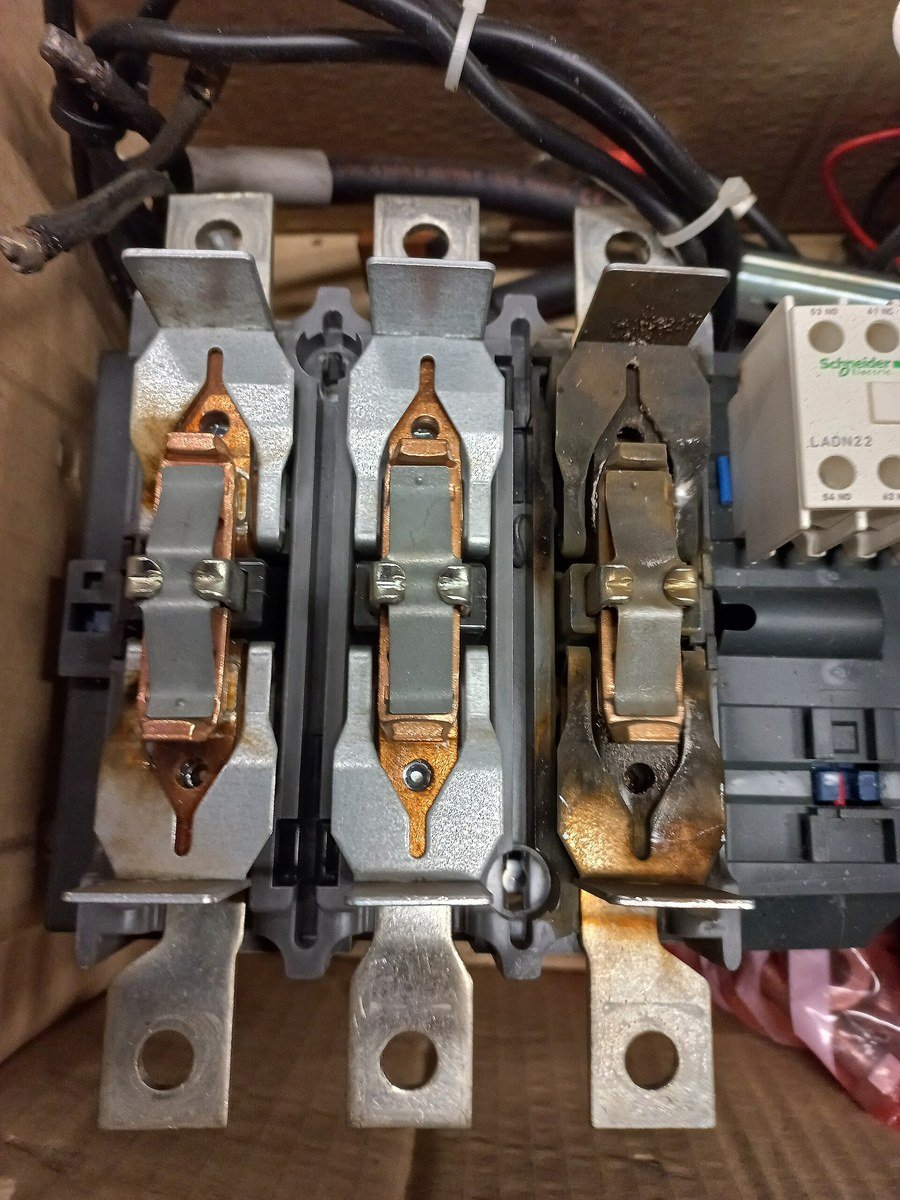
You hear it pull in, the PLC shows the output is on, but the motor stays dead. The usual culprits are pitted or oxidized main contacts, loose terminal screws, or a broken load-side conductor. Contact resistance has climbed high enough to block current, even though the contacts look closed.
Check: De-energize, lock out, tag out and verify absence of voltage (including any possible back-feed sources) before measuring continuity across each main contact with a multimeter. A healthy closed contact reads near zero ohms. Then check the terminals for signs of heat and the conductors for breaks.
Possible next step: Re-tighten every terminal to the torque stated by the manufacturer, dress lightly pitted contacts only where the manufacturer permits it, and replace the contactor if the contacts are badly burned or the housing shows heat damage.
3. Coil Burns Out
Overvoltage is the classic coil killer, but sustained undervoltage can be worse: the armature never seats fully, coil current stays at inrush level, and the coil cooks itself. High ambient temperature and continuous duty in a sealed cabinet shorten coil life too.
Check: Smell for varnish, look for a discolored or swollen coil, and measure coil resistance against the datasheet value. A coil that reads open circuit is dead.
Possible next step: Replace the coil or the whole unit with the same rating, verify the control voltage under load, and improve cabinet ventilation.
4. Contacts Weld Together
If the motor keeps running after the stop button is pressed — or the unit does not release when the coil is de-energized — the contacts have welded shut. The usual causes are an over-current condition, switching a motor load with a contactor rated for resistive duty (AC-1 instead of AC-3), or very frequent starting that never lets the contacts cool.
Check: Confirm the circuit is isolated, locked out and verified dead, then inspect the contact faces. Welding leaves obvious fusion marks on the silver alloy.
Possible next step: Replace the contactor and correct the root cause: match the utilization category to the actual motor load and its starting conditions, and allow adequate contact margins. For motor duty, size against AC-3 as described in our AC contactor selection guide.
5. Contactor Runs Hot
Warm is normal. Hot enough to discolor the housing is not. Overcurrent, loose terminations, poor airflow, and high ambient temperature all push a contactor past its thermal limit. Heat accelerates contact oxidation, which raises resistance, which generates more heat — a spiral that ends in failure.
Check: Measure the actual load current per phase and compare it with the contactor rating. Locate hot spots with a thermal imager, or have qualified personnel use an appropriate non-contact temperature-measuring device in line with the equipment manual and site procedures — never by touching equipment that may be live. Hot spots usually point to a loose connection.
Possible next step: Reduce the load or step up to a larger frame, re-torque all terminals, and make sure the panel has enough airflow. If the ambient temperature exceeds the value stated for the contactor, apply the derating factor given in its datasheet.
6. Contactor Won’t Pull In at All
No click, no movement, nothing. Work backwards from the coil: is the control voltage present? Is the coil itself open? Is the control circuit — pushbutton, relay, PLC output, fuse — actually delivering the signal?
Check: Qualified personnel measure the voltage across the coil terminals. If rated voltage is present and the contactor still does not pull in, test coil resistance with the circuit isolated. If no voltage arrives, trace the control loop: blown fuse, open overload relay contact, and faulty PLC outputs are the usual suspects.
Fix: Replace the faulty component. Test the coil at the same time, because a coil that failed once may have been damaged by the same event that killed the circuit.
7. Auxiliary Contacts Fail Silently
Auxiliary contacts carry only small control currents, and that light load lets a thin oxide film build up on the contact faces. One day the seal-in circuit does not hold, the status feedback never reaches the PLC, or the interlock stops working. The main contacts may be perfectly fine while the auxiliary block is dead.
Check: With the circuit isolated and verified dead, operate the contactor through the manual test feature permitted by its instruction sheet, and check continuity across the auxiliary NO and NC contacts in both states. They should mirror the contactor state exactly.
Possible next step: Clean the contacts where the manufacturer allows it, or swap in a fresh auxiliary block. Quality auxiliary contacts are a bolt-on component on most SMO-K-style contactors, so replacement takes minutes, not hours.
AC Contactor Fault Diagnosis at a Glance
Symptom
Most likely cause
Safe first check
Chattering or buzzing
Low coil voltage, damaged shading ring
Check the manual and nameplate; qualified personnel measure coil voltage under load
Clicks but motor dead
Pitted contacts, loose terminal, broken wire
With the circuit isolated, check terminals for heat and tightness; qualified personnel test contact continuity
Burnt coil
Overvoltage, sustained undervoltage, heat
Check for a burnt smell, a discolored coil and adequate cabinet ventilation; qualified personnel measure coil resistance and control voltage
Welded contacts
Overcurrent, wrong utilization category
Confirm the unit is isolated; qualified personnel inspect the contact faces and verify the utilization category against the load
Runs hot
Overload, loose termination, no airflow
Check for loose terminals and blocked airflow; qualified personnel take per-phase current and thermal readings
Won’t pull in
Open coil, control circuit fault
Check the control fuse and the overload relay contact; qualified personnel measure coil voltage and resistance
Auxiliary contact failure
Oxide film, light-load wear
Note any signalling or interlock fault; qualified personnel test NO/NC continuity in both states
How to Test an AC Contactor with a Multimeter
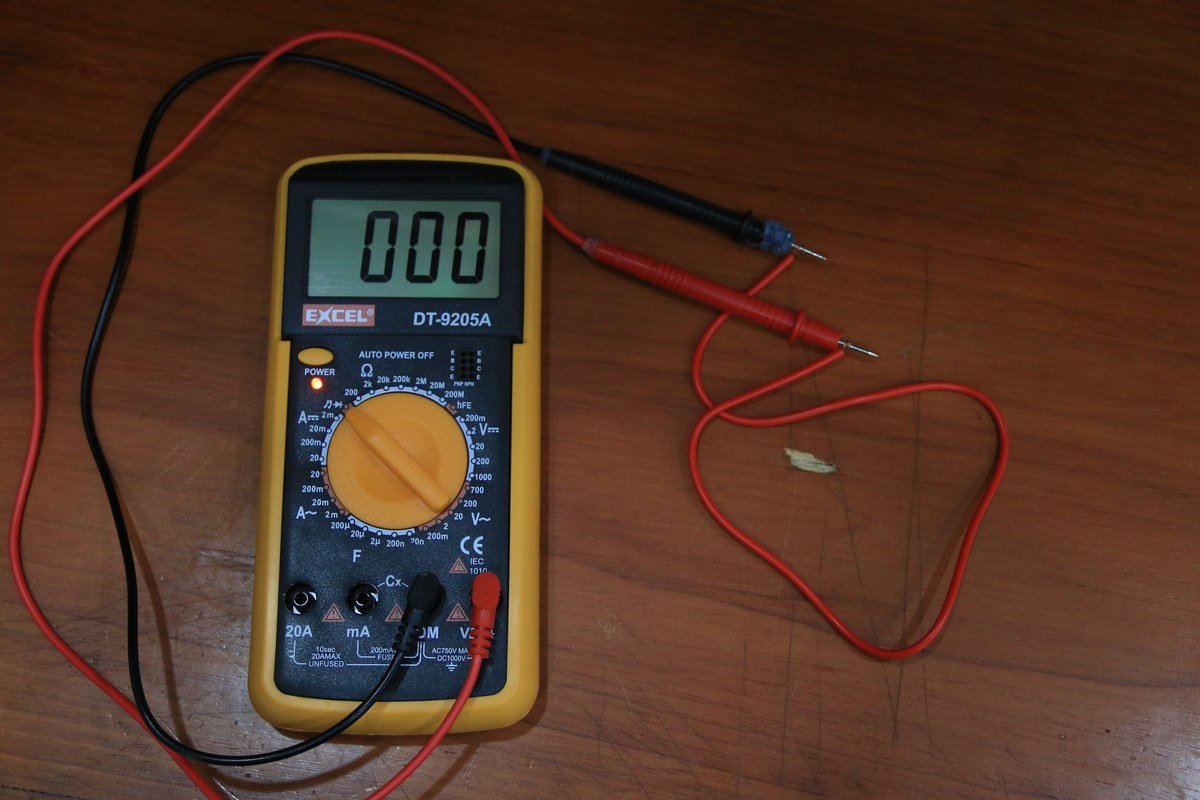
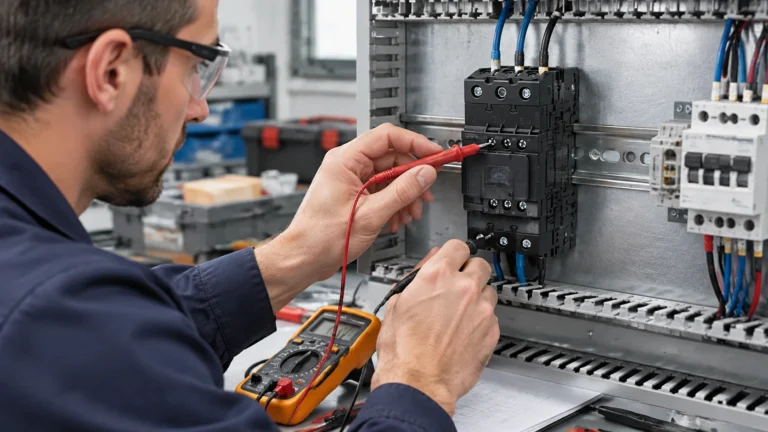
A standard multimeter is enough to diagnose nearly every contactor fault. Steps 1, 2, 4 and 5 are carried out with the circuit isolated, locked out and verified dead, including any possible back-feed sources. Steps 3 and 6 involve energized measurement and must be performed only by qualified personnel, following the manufacturer’s instructions, a risk assessment and the site’s safe work procedures.
Lock out the circuit. Isolate the panel and verify zero voltage with your meter before opening anything.
Test the coil. Set the meter to resistance and read across the coil terminals. Compare the reading with the resistance stated in the manufacturer’s datasheet for the exact coil. Open circuit or a dead short means the coil is gone.
Test coil voltage. Qualified personnel only: with the power circuit isolated, restore control power, energize the coil, and measure the voltage at the coil terminals under load. The reading should fall within the tolerance stated on the nameplate or in the datasheet.
Test the main contacts. With the circuit isolated, locked out and verified dead, check each pole across the incoming and outgoing terminals. An open contactor shows no continuity. Whether the contactor may be closed mechanically for testing, and how, depends on the specific model — follow its instruction sheet, and never test with any source that could back-feed the panel.
Test the auxiliary contacts. Repeat the continuity check on the NO and NC auxiliary terminals in both states.
Check contact voltage drop under load. Qualified personnel only: with the motor running under controlled conditions, measure across each closed main contact. A healthy contact drops only millivolts; a drop well above the figure in the manufacturer’s datasheet indicates rising resistance and a contact that needs attention.
Repair or Replace?
Not every fault needs a new contactor. Loose terminals, burned auxiliary blocks, and replaceable coils are cheap, fast fixes. Welded contacts, a charred housing, or a contactor that has already failed twice point to replacement — the second failure usually means the first fix addressed a symptom, not the cause.
Age matters too. A 10-year-old contactor in a dusty cabinet is rarely worth rebuilding. If the frame size, coil voltage, or auxiliary configuration no longer matches the application, upgrading to a correctly sized unit is cheaper than nursing an outdated one. The SMO-K AC contactor range covers the most common commercial and light-industrial motor sizes, from 09-18 A frames up to 115-150 A units for heavy process equipment. Ratings, coil options and accessories differ between frames, so confirm each figure against the datasheet for the specific model before ordering.
How to Prevent AC Contactor Failure
The best repair is the one you never make. These five habits prevent the large majority of premature contactor failures.
Size it right the first time. Confirm the utilization category against the actual motor load and its starting and braking conditions, allow real margin on the current rating, and check the coil voltage against the control circuit. Do not select on running current or the AC-3 label alone — work from the manufacturer’s data for the load concerned.
Protect the coil. In PLC-driven panels, add a surge suppressor across the coil to absorb switching transients.
Torque the terminals. Loose connections cause most overheating. Re-torque at the first annual service.
Keep it clean and cool. Dust, humidity, and heat all shorten contactor life. Filtered, ventilated enclosures make a measurable difference.
Pair it with a thermal overload relay. The relay protects the motor; the contactor protects the circuit. Skipping one shortens the life of both.
When an application pushes a standard unit to its limits, WZSMO also supplies custom coil voltages and OEM configurations so the contactor is built for the job instead of tolerated.
FAQ
Why is my AC contactor buzzing?
The most common cause is low coil voltage under load, often from long or undersized control wiring. If the voltage is correct, a damaged shading ring is the usual suspect. Both are diagnosed with a simple voltage measurement at the coil.
How do I know if a contactor coil is bad?
Measure the coil resistance with a multimeter. An open circuit (infinite resistance) or a shorted coil (near zero) confirms failure. Compare your reading with the manufacturer’s datasheet for the exact rating.
What causes a contactor to weld closed?
Overcurrent, switching a load above the contactor’s rating, or using a resistive-duty (AC-1) contactor on motor duty. The arc melts the contact faces together on the final closure. Replace the unit and correct the sizing.
How long should an AC contactor last?
Mechanical life is typically 10 million operations or more. Electrical life depends on load current and switching frequency. Correctly sized and maintained, an SMO-K contactor outlasts most of the equipment it controls.
Can I replace just the contacts instead of the whole contactor?
Often yes. Contact kits, coils, and auxiliary blocks are replaceable on SMO-K-style contactors. If the housing is charred, the contacts have welded, or the unit has failed before, replacement is the safer and usually cheaper route.
Do I need a surge suppressor on the contactor coil?
In PLC or electronic control circuits, yes. Switching transients from the coil can damage the output. A suppressor fitted across the coil absorbs those spikes and extends the life of both the contactor and the controller.
Keep Your Starter Running
AC contactor troubleshooting comes down to four zones and a multimeter: verify the coil circuit, test the main and auxiliary contacts, and correct the root cause instead of the symptom. Do that, and the contactor stops being a maintenance headache.
WZSMO builds the full SMO-K contactor range from 9 A to 150 A, with standard and custom coil voltages, auxiliary configurations, and OEM options for distributors and panel builders. Contact our team for replacement units, spares, or a complete motor-control solution matched to your spec.
What an MCB Supplier Should Confirm Before Quoting Miniature circuit breakers are the easiest low-voltage component to order and the easiest to order badly. Unit prices are low, lead times are short, and the range looks simple: a current rating, a pole count, a trip curve. The specification that matters is rarely written on the […]
What an AC Contactor Supplier Should Specify Before Quoting An AC contactor looks like a simple device until you order one from an overseas supplier. The catalogue entry shows a current rating and a coil voltage, and that is where most purchasing stops. By the time the shipment arrives, the difference between a usable part […]
What MCCB Price Actually Reflects Two quotations for molded case circuit breakers can differ by a factor of ten and both be legitimate. The reason is that an MCCB price is not one number. It is a set of variables multiplied together, and most buyers receive quotations that differ in more than one of those […]