MCB vs MCCB: Key Differences and How to Choose the Right One
Published: Author: Rachel
Ask any panel builder and they’ll tell you the same thing: someone asks about MCB vs MCCB at least once a week. It usually comes from a customer who has a panel to build, a budget to respect, and no time to read a datasheet twice.
Both devices protect circuits from overloads and short circuits. Both reset after tripping. The difference is scale, and choosing wrong costs money one way or another: either you overpay for protection you don’t need, or you leave a high-energy circuit under-protected.
MCB vs MCCB: The Comparison Table
Feature
MCB
MCCB
Rated current
Up to 125 A, typically 6-63 A
16 A to 1600 A
Breaking capacity
Usually 6-10 kA
Up to 50 kA or more
Trip unit
Fixed thermal-magnetic
Thermal-magnetic or adjustable
Mounting
DIN rail
Panel or plug-in
Adjustability
None
Some models, pickup and delay
Typical use
Lighting, sockets, small loads
Main incomers, feeders, motors
Standard
IEC 60898
IEC 60947-2
That table settles about 80% of the debate. The remaining 20% is where real projects go sideways, so let’s look closer.
What Is an MCB?
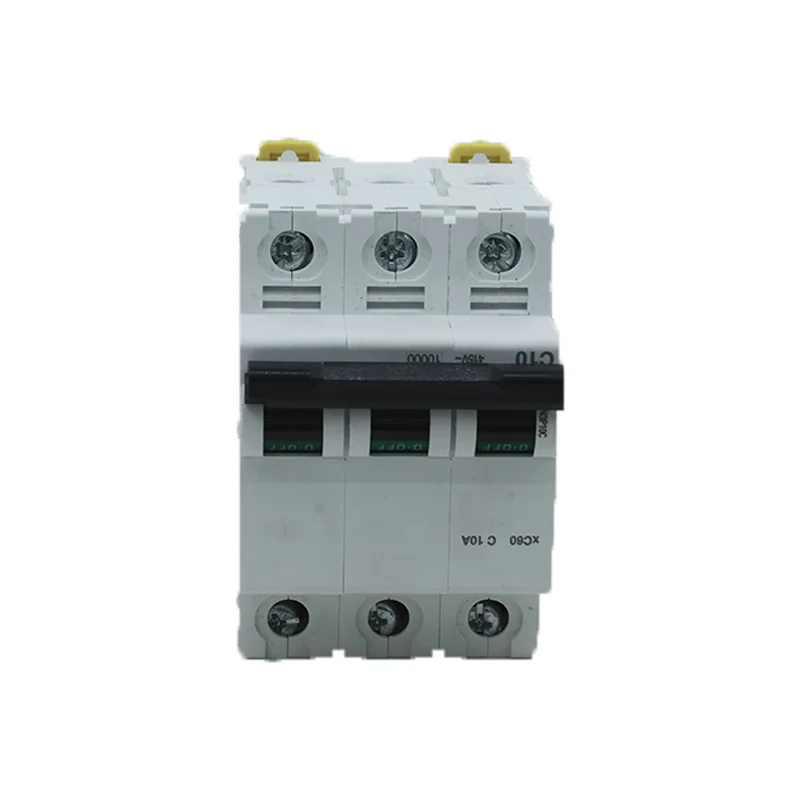
A miniature circuit breaker is a compact, DIN-rail-mounted device built for branch circuits. Its trip characteristics are fixed at the factory. Buy a 16 A MCB and it protects at 16 A, period. No dials, no settings, nothing to configure.
That simplicity is the whole point. It keeps cost down and installation foolproof, which is why MCBs dominate residential boards, small commercial premises, and the final circuits of larger installations.
The SMO-B1 MCB series covers the common 1P-4P range up to 63 A. The SMO-B2 adds a higher breaking capacity for tougher conditions.
What Is an MCCB?
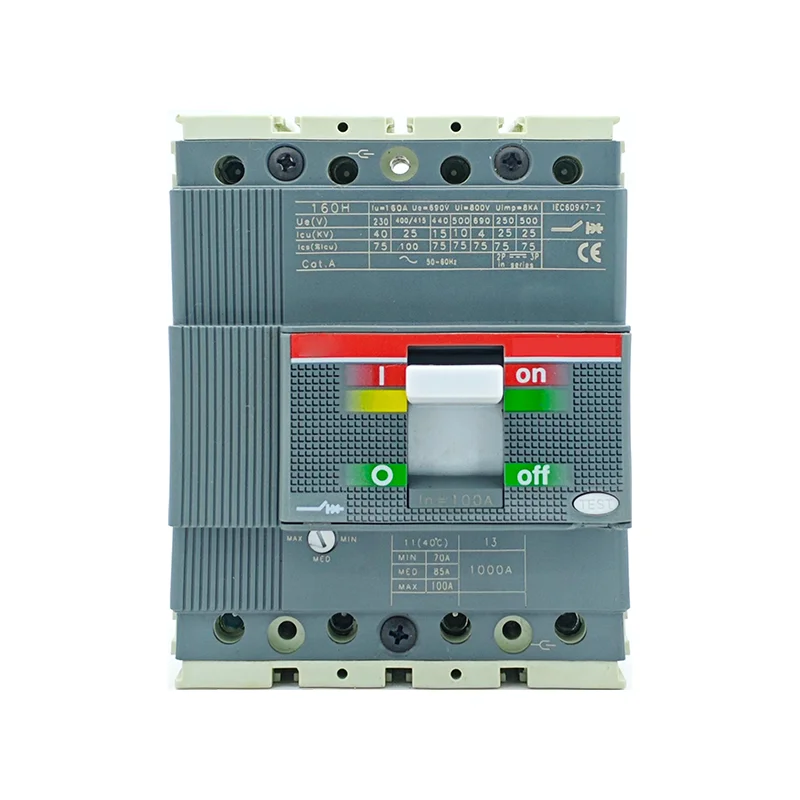
A molded case circuit breaker is built for the heavier jobs. It protects main incomers, large motor feeders, transformer secondaries, and busbar distribution. Inside the molded case sit a more robust contact system, larger arc chambers, and often an adjustable trip unit so engineers can tune protection to the load.
Think of the distribution tree. The MCCB sits at the top, feeding the MCB-protected branch circuits below. The ST-1N 100 A MCCB is a common entry point for small industrial boards, while the SMO-P series extends further with multiple frame sizes for feeders up to several hundred amps.
Five Questions That Decide It
1. How much current does the circuit carry?
Below about 100 A, an MCB usually does the job. Above that, or if you want room to grow, step up to an MCCB.
2. What’s the available fault current?
This is the question that gets people hurt when it’s skipped. If the short-circuit current at the board exceeds the MCB’s 6-10 kA breaking capacity, you need an MCCB with a higher Icu rating, or a coordinated backup upstream.
3. Do you need adjustable protection?
MCBs are fixed, period. If you need to dial in trip settings for motor inrush or a variable load, an adjustable MCCB trip unit is the only real option.
4. Where is it mounted?
DIN rail in a consumer unit says MCB. A switchboard with bolted busbars says MCCB. The mounting system alone often settles the argument.
5. What does the standard say?
MCBs follow IEC 60898. MCCBs follow IEC 60947-2. If your specification or local code names one of these, the breaker type is already decided for you.
Use Both, Not Either
Here’s what experienced panel designers actually do: they use both. The MCCB guards the main supply and feeders. MCBs protect each branch circuit. When a socket circuit faults, only its MCB trips, and everything else stays powered.
That hierarchy is the difference between a ten-minute fix and a site-wide shutdown. Selective coordination, they call it. It’s worth designing for.
FAQ
Can I use an MCB instead of an MCCB?
Only if the current and fault level stay within the MCB’s ratings. Past roughly 100 A, or beyond 10 kA breaking capacity, an MCCB is the correct and safer choice.
Is an MCCB more expensive than an MCB?
Per unit, yes. But it’s not a fair comparison. They protect different levels of the system, and buying an MCB where an MCCB belongs is a false economy that can cost far more in a single fault event.
Do MCBs and MCCBs follow the same standards?
No. MCBs follow IEC 60898 for household and similar installations. MCCBs follow IEC 60947-2 for low-voltage switchgear. Check which standard your project calls out before ordering.
Which is better for solar or inverter systems?
That depends on the DC rating and fault characteristics of your system. Both MCBs and MCCBs come in DC-rated versions. Check the datasheet for the specific DC voltage and current ratings before you order.
Choose the Right Breaker, Every Time
Neither type is “better.” They’re tools for different jobs. Match the device to the current, the fault level, and the standard, and your installation stays safe, economical, and easy to maintain.
An AC contactor is an electrically operated switch for high-current AC loads. Learn how the coil, armature, and contacts work, plus parts, nameplate ratings, wiring, and applications.