Guide de sélection des contacteurs CA : caractéristiques techniques, bobines et applications de la série SMO-K
Publié le : Auteur : Rachel
Chaque démarreur de moteur en est équipé. Chaque tableau de commande de chauffage, de ventilation et de climatisation en cache quelques-uns. Le contacteur CA est le pilier qui active et coupe l'alimentation des millions de fois, sans que l'on y prête guère attention. Jusqu'à ce qu'il tombe en panne.
Le choix n'est pas compliqué, mais il ne pardonne pas. Si vous choisissez les trois bons chiffres, le contacteur durera plus longtemps que la machine qu'il commande. Si vous vous trompez, vous devrez remplacer les contacts au bout de six mois.
Fonctionnement d'un contacteur CA
À l'intérieur du boîtier se trouve une bobine électromagnétique placée au-dessus d'une armature mobile. Lorsque la bobine est sous tension, l'armature s'abaisse, fermant ainsi les contacts d'alimentation principaux. Lorsque le signal est coupé, des ressorts relâchent les contacts, les ouvrant d'un coup sec.
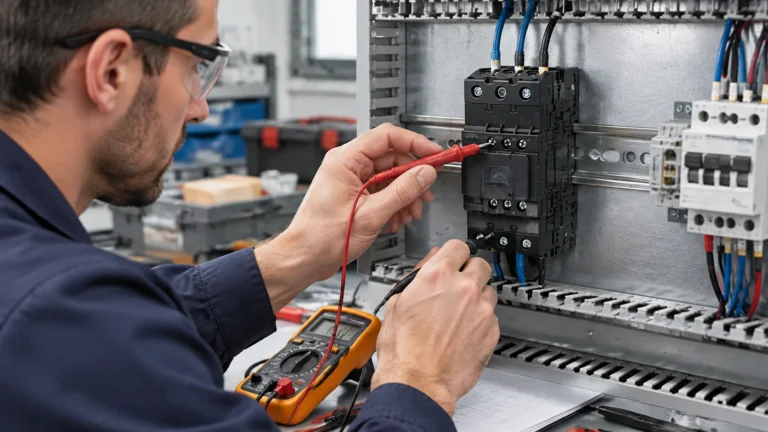
Lorsque les contacts s'ouvrent sous charge, un petit arc électrique se forme. Le système d'extinction d'arc du contacteur le gère, ce qui explique précisément pourquoi les contacteurs résistent à la commutation là où un interrupteur manuel se souderait et resterait bloqué. La plupart sont également équipés de contacts auxiliaires, des contacts à faible courant qui renvoient des informations d'état au contrôleur ou assurent l'étanchéité du circuit de la bobine. Il est tout aussi important de bien choisir ces contacts que les caractéristiques nominales principales.
La série SMO-K en bref
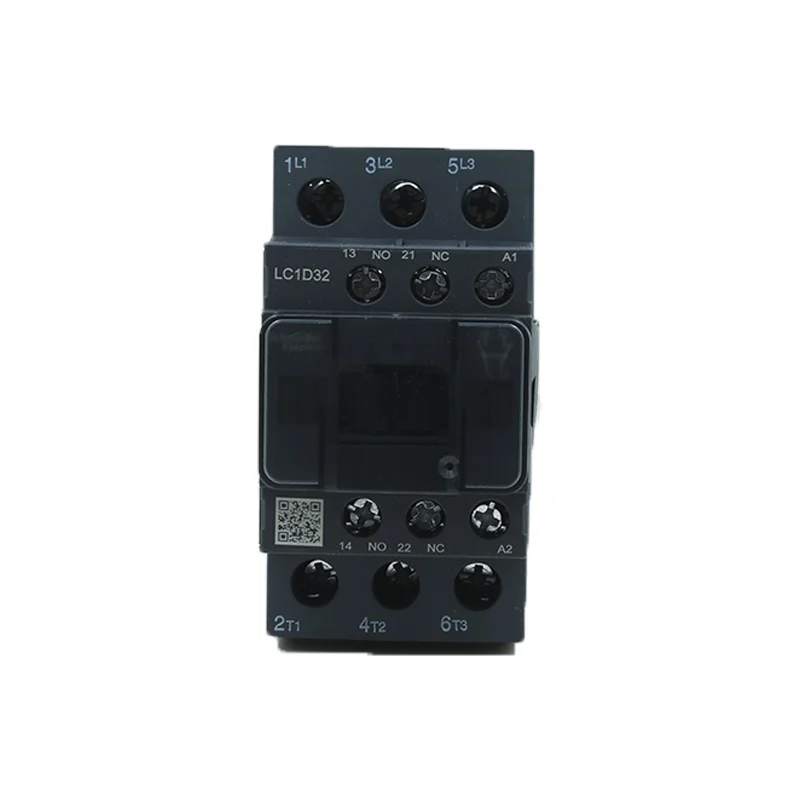
La gamme SMO-K compte parmi les gammes de contacteurs les plus utilisées dans le domaine de la commande des moteurs industriels. Associez-la à un relais thermique de surcharge et vous obtenez un démarreur de moteur complet. Ajoutez-y des blocs auxiliaires, des verrouillages mécaniques ou des parasurtenseurs, et elle s'adapte à pratiquement n'importe quel tableau électrique.
La gamme SMO-K de WZSMO propose des modèles allant des petits appareils de 9 A destinés aux moteurs de faible puissance jusqu'à ceux de 150 A destinés aux charges industrielles importantes :
Série
Courant nominal
Puissance du moteur (AC-3, 400 V)
Applications typiques
SMO-K 09-38
9-38 A
4 à 18,5 kW
Pompes, ventilateurs, compresseurs, convoyeurs
SMO-K 40-65
40 à 65 A
18,5 à 30 kW
Grandes pompes, systèmes de chauffage, ventilation et climatisation, machines-outils
SMO-K 80-95
80-95 A
37 à 45 kW
Compresseurs lourds, concasseurs, palans
SMO-K 115-150
115-150 A
55 à 75 kW
Moteurs de grande puissance, équipements de traitement
Le Contacteurs SMO-K 09-38 A prendre en charge les tailles de moteurs les plus courantes dans les environnements commerciaux et l'industrie légère. Le SMO-K 40-65 A Cette gamme est conçue pour supporter des charges plus importantes au niveau du chauffage, de la ventilation et de la climatisation (CVC) ainsi que des pompes.
Comment choisir un contacteur CA en six étapes
1. Associez la catégorie d'utilisation
C'est le chiffre que la plupart des gens ignorent, et pourtant c'est celui qui compte le plus. AC-1 couvre les charges non inductives, comme le chauffage. AC-3 concerne les moteurs à cage d'écureuil, c'est-à-dire ceux qui démarrent et s'arrêtent en cours de fonctionnement. Pour le dimensionnement du moteur, se référer à la classe AC-3. Si l'application implique des mouvements par à-coups ou des blocages fréquents, il faut plutôt opter pour la classe AC-4.
2. Dimensionnement en fonction du courant à pleine charge
Le courant nominal du contacteur doit être égal ou supérieur au courant à pleine charge du moteur dans la catégorie AC-3. Ne vous fiez pas uniquement à la puissance en chevaux-vapeur pour déterminer le dimensionnement. Une même puissance nominale en kW entraîne des courants différents selon la tension, et une estimation erronée réduit rapidement la durée de vie des contacts.
3. Choisissez la tension de la résistance
Choisissez une bobine adaptée à votre circuit de commande. 24 V CA/CC pour les panneaux commandés par API. 110 V ou 220 V pour un câblage de commande classique. 380 V pour une commande directe à la tension du réseau. Une erreur à ce niveau est la plus courante lors de la commande d’un système de commande de moteur ; veillez donc à bien vérifier avant d’acheter.
4. Compter les pôles et les contacts auxiliaires
La plupart des applications motorisées nécessitent un contacteur tripolaire ainsi qu'un ou deux contacts auxiliaires pour la logique de commande. Vérifiez vos besoins en contacts auxiliaires NO/NC avant de passer commande. Les installer a posteriori est fastidieux et coûte plus cher.
5. Vérifier la durée de vie électrique et mécanique
Pour les applications à cycle intensif, telles que les convoyeurs et les lignes d'emballage, comparez la durée de vie mécanique (souvent de 10 millions de cycles ou plus) et la durée de vie électrique à votre courant AC-3. Un châssis plus grand permet souvent d'obtenir une durée de vie électrique nettement plus longue. Cela vaut la peine de consacrer un peu plus d'espace dans le tableau électrique.
6. Ajouter des protections et des accessoires
Associez le contacteur à un relais thermique adapté. C'est ce relais, et non le contacteur, qui protège le moteur. Et si votre circuit de commande est piloté par un automate programmable, ajoutez des parasurtenseurs pour protéger la bobine contre les transitoires.
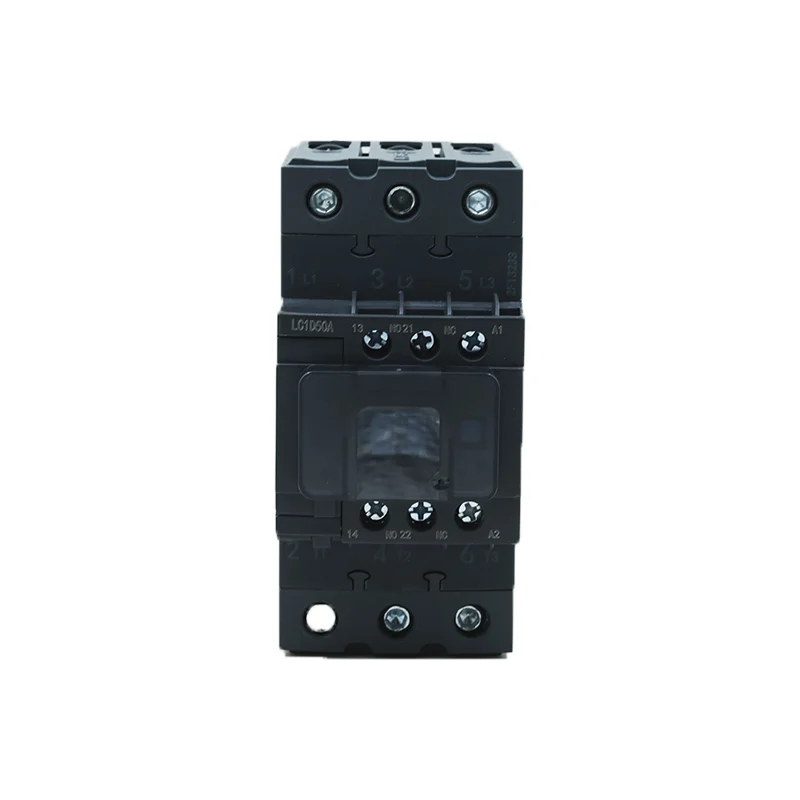
Pour les utilisations plus intensives, le SMO-K 80-95 A et SMO-K 115-150 A Ces châssis vous offrent les marges de contact requises par les équipements de processus industriels.
Cinq erreurs qui réduisent considérablement la durée de vie des contacteurs
Choisir un cadre trop petit. Un contacteur fonctionnant à sa limite de courant chauffe, et la chaleur est l'ennemie de la durée de vie des contacts.
Tension de bobine incorrecte. Une sous-tension provoque le cliquetis des contacts. Une surtension brûle la bobine. Ces deux phénomènes réduisent considérablement la durée de vie du contacteur.
Sans tenir compte de la catégorie d'utilisation. L'utilisation d'un contacteur de classe AC-1 pour commander un moteur entraîne inévitablement la soudure des contacts.
Contourner le relais de surcharge. Le contacteur protège le circuit, pas le moteur. C'est le relais thermique qui protège le moteur.
Négliger l'environnement. La poussière et l'humidité réduisent la durée de vie des contacteurs. Dans les environnements sales ou humides, il est nécessaire d'utiliser un boîtier adapté ou de réduire la puissance nominale.
FAQ
Quelle est la différence entre un contacteur et un relais ?
Les deux sont des commutateurs à commande électrique. Cependant, les contacteurs commutent des circuits de puissance, avec des courants plus élevés, une suppression d'arc et souvent trois pôles. Les relais commutent des signaux de commande de faible puissance. À l'intérieur d'un tableau électrique, on trouve généralement des relais qui alimentent les bobines des contacteurs.
Puis-je utiliser un contacteur pour des charges en courant continu ?
À condition qu’il soit homologué pour le courant continu. Les arcs électriques en courant continu étant plus difficiles à éteindre que ceux en courant alternatif, les contacteurs à courant continu nécessitent des matériaux de contact et des chambres d’arc différents. Les contacteurs standard à courant alternatif ne sont pas interchangeables.
Que signifie « AC-3 » sur la plaque signalétique ?
AC-3 correspond à la catégorie d'utilisation prévue pour les moteurs à cage d'écureuil. Le contacteur établit, maintient et coupe le courant de fonctionnement du moteur. Il s'agit de la catégorie de référence pour les applications normales de démarrage et d'arrêt des moteurs.
Ai-je encore besoin d'un relais de surcharge si le contacteur en intègre un ?
Certaines gammes proposent des protections contre les surcharges intégrées, mais dans la plupart des installations de type SMO-K, le relais thermique est un module séparé situé sous le contacteur. Dans tous les cas, la protection du moteur est indispensable. Un contacteur seul ne suffit pas à protéger le moteur.
Quelle est la durée de vie d'un contacteur CA ?
La durée de vie mécanique s'élève à plusieurs millions de cycles. La durée de vie électrique dépend du courant de charge et de la fréquence de commutation. S'il est correctement dimensionné et utilisé, un contacteur SMO-K a une durée de vie supérieure à celle de la plupart des équipements qu'il commande.
Spécifiez en toute confiance
Trois paramètres sont déterminants : le courant à pleine charge du moteur, la tension de bobine de votre circuit de commande et la catégorie d’utilisation de votre charge. Choisissez-les judicieusement, ajoutez-y un relais de surcharge adapté, et vous obtiendrez un démarreur qui fonctionnera pendant des années.
WZSMO développe l'intégralité du Gamme de contacteurs SMO-K de 9 A à 150 A, avec des tensions de bobine et des accessoires sur mesure pour les projets OEM. Contactez notre équipe pour une solution complète de commande de moteur adaptée à vos spécifications.
Ce qu’un fournisseur de contacteurs CA doit préciser avant d’établir un devis Un contacteur CA semble être un dispositif simple, jusqu’à ce que vous en commandiez un auprès d’un fournisseur étranger. La fiche technique du catalogue indique l’intensité nominale et la tension de la bobine, et c’est souvent là que s’arrête le processus d’achat. Lorsque la livraison arrive, on constate que la pièce n’est pas utilisable […]
Ce que reflète réellement le prix d'un disjoncteur moulé (MCCB) : deux devis pour des disjoncteurs moulés peuvent présenter un écart d'un facteur dix tout en étant tous deux valables. La raison en est que le prix d'un MCCB ne se résume pas à un seul chiffre. Il s'agit d'un ensemble de variables multipliées entre elles, et la plupart des acheteurs reçoivent des devis qui diffèrent sur plusieurs de ces […]
En quoi l'évaluation d'un fournisseur chinois de disjoncteurs moulés se distingue-t-elle ? Demandez à un distributeur pourquoi il achète des disjoncteurs moulés en Chine et il vous répondra généralement en évoquant le prix. Le prix a certes son importance, mais c'est l'aspect le moins complexe de la décision. Ce qui détermine réellement la réussite d'un programme d'importation, c'est la capacité du fournisseur que vous avez choisi à […]