




Description
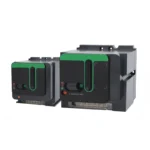
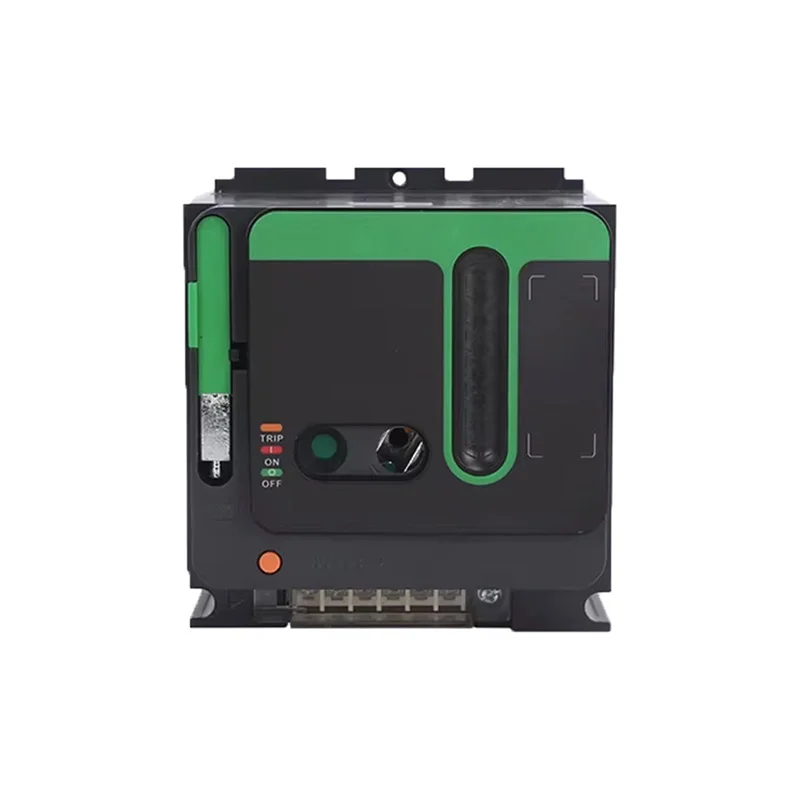
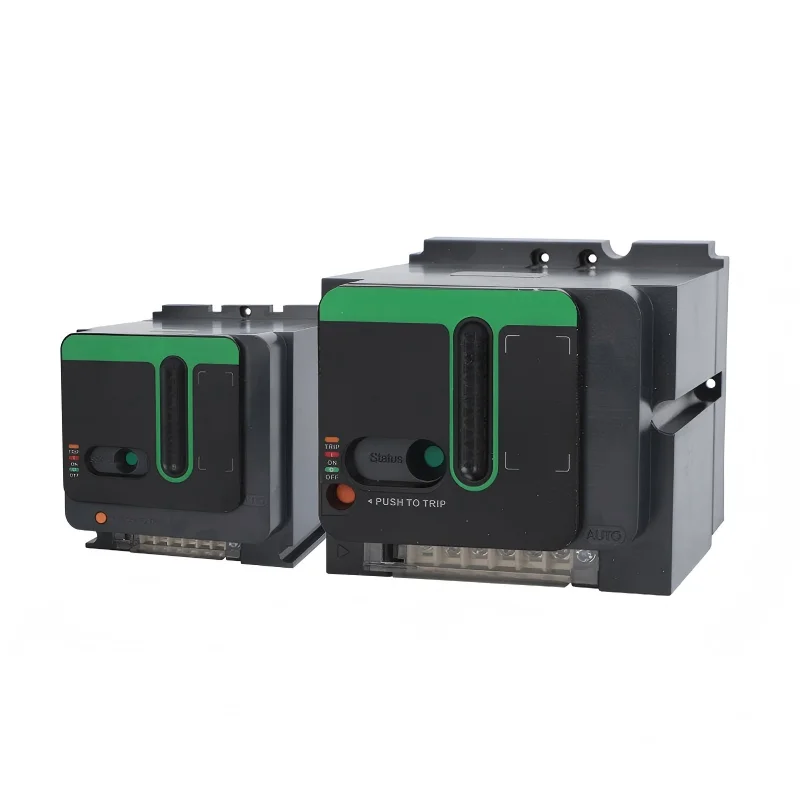
The motor – operated mechanism is an external accessory of the circuit breaker. It is used to achieve remote automatic opening and closing operations and is widely applied in industrial automation, intelligent power distribution systems, and scenarios with high – reliability requirements. Its core function is to drive the mechanical structure of the circuit breaker through a motor or electromagnet, enabling remote control, replacing manual operation, and improving the automation level of the system.
Motor – driven Operating Mechanism:
- It drives the reduction mechanism through a motor, converting high – speed rotation into low – speed and high – torque output, and pushing the main contacts of the circuit breaker to complete the closing or opening action.
- Control Signal Input: Receives electrical signals (such as DC 24V/AC 230V) from a PLC, relay, or remote control system.
- Motor Drive: The motor rotates according to the signal direction, driving the reduction gear set to actuate the contacts of the circuit breaker.
- Position Feedback: Built – in Hall sensors or encoders monitor the position of the contacts in real – time to ensure operation accuracy.
Electromagnet – operated Operating Mechanism:
- It directly drives the trip rod by the attraction and release of the electromagnet to achieve rapid opening or closing.
- Control Signal Trigger: When the electromagnetic coil is energized, it generates magnetic force, pushing the armature to act, triggering the tripping or closing of the circuit breaker.
- Low – power Consumption Design: It is suitable for small – sized circuit breakers (frame current ≤ 225A) with a fast response speed (<0.1s)
FAQ
What is the COMPATIBLE FRAME for
For MT 100A~630A, the listed COMPATIBLE FRAME is SNSX100-250 SNSX400-630. Confirm the exact configuration against your project requirements before ordering.
What is the CONTROL VOLTAGE for
For MT 100A~630A, the listed CONTROL VOLTAGE is AC 220V-240V / DC 24V(UC). Confirm the exact configuration against your project requirements before ordering.
What is the OPERATING CURRENT for
For MT 100A~630A, the listed OPERATING CURRENT is < 0.5A. Confirm the exact configuration against your project requirements before ordering.
What is the STANDARD for
For MT 100A~630A, the listed STANDARD is IEC 60947-2, CE. Confirm the exact configuration against your project requirements before ordering.